Start with the exact reason for this his birthday song
A useful brief begins with one sentence that explains why this song is for your stepdad now. For this article’s angle, the strongest focus is to show gratitude through dependable actions while using family terms that fit.
Write that reason before collecting rhymes or choosing instruments. A practical version might be: “I want this song to show I value the steady actions that made our relationship feel trustworthy.” That sentence gives every later choice a test. A memory belongs if it supports the reason; an impressive detail that leads somewhere else can wait for another gift or conversation.
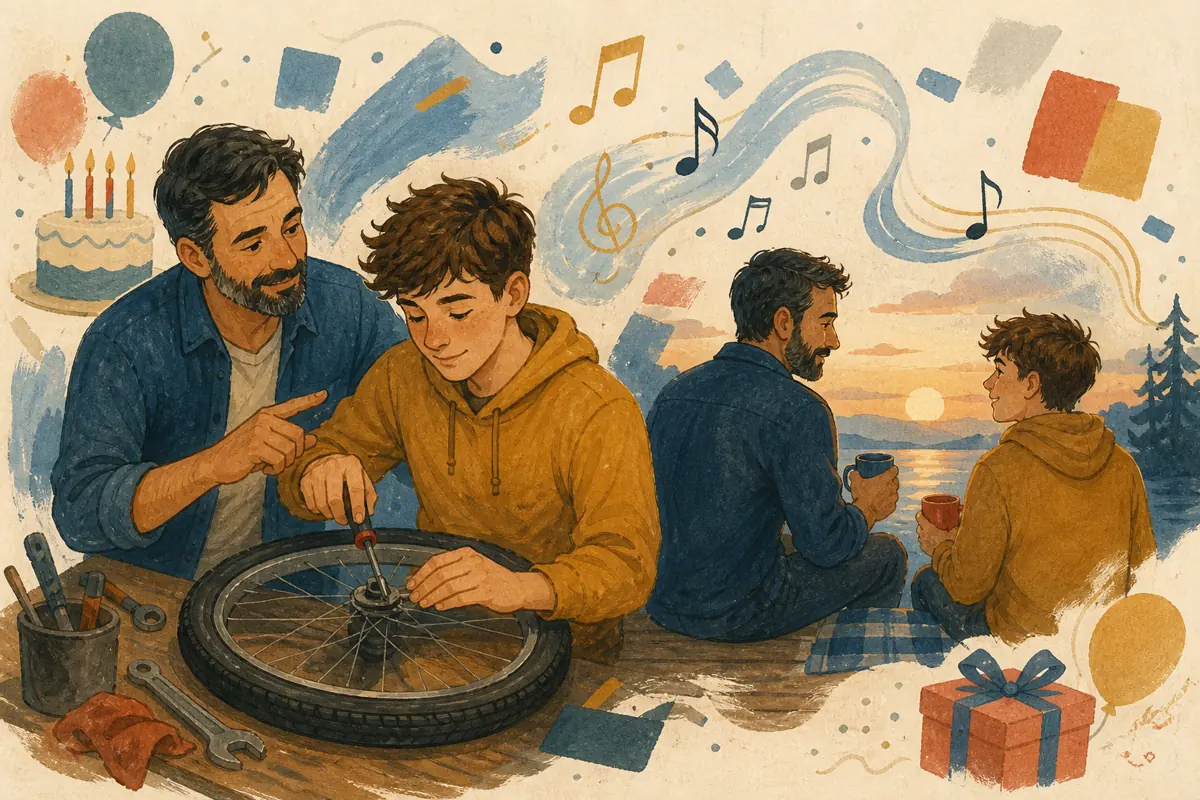
This step also prevents the song from becoming a list of compliments. Your stepdad should be able to connect the message to actual shared experience. A useful starting scene could be teaching a task without taking over, showing up for a routine, or respecting time with another parent. Choose only one scene at first, then identify what it demonstrates about the relationship.
Turn teaching a task without taking over into usable lyric detail
The best raw material is specific enough to picture and simple enough to explain in one or two lines. Ask for actions, places, sounds, and repeated phrases instead of asking only for favorite memories.
For your stepdad, begin with a recent detail and an older detail. The contrast gives the song movement without requiring a complete timeline. Describe who was there, what happened, and one sensory cue such as weather, a room, a road, or a familiar sound. Keep private names, locations, and family information out if the file may be shared beyond the intended listener.
Rank the details by recognition rather than drama. The useful question is whether your stepdad would know exactly what you mean. Teaching a task without taking over, showing up for a routine, or respecting time with another parent can work because it is concrete; “you always support me” needs an example before it earns a place in the lyric.
- One detail from the last month
- One place tied to the relationship
- One phrase the recipient actually uses
- One action that shows care without needing explanation
Give each selected memory one clear musical job
A first listen should make sense without an explanation afterward. Give each part one job and let the most important message return in the chorus.
Use the first verse for the selected scene and the second for what has changed or remained dependable. A pre-chorus can state what you learned from the details. The chorus should use direct language close to “I value the steady actions that made our relationship feel trustworthy.” Repeating a clear message is more useful than adding another unrelated memory.
Keep names and dates only when they sound natural. A date can help if the occasion depends on it, but a string of dates usually makes the vocal stiff. Read the outline aloud before drafting lyrics. If you need to explain who a person is or why a place matters, add that context in the verse rather than assuming the listener will decode it.
- Verse 1: one recognizable scene
- Verse 2: what that scene reveals over time
- Chorus: the direct message
- Ending: one present-tense wish or commitment
Make music connected to his own taste serve the message
Genre should help the recipient hear the words in a familiar emotional setting. It should not force the relationship into stereotypes that do not fit.
Use music connected to his own taste because its pacing, instruments, or vocal style matches how your stepdad listens, not because the occasion supposedly requires it. Decide whether the lyric needs room for a detailed verse, a repeated hook, or a conversational vocal. The profile for this song is clear: begin with one dependable action, show how it repeated, explain what trust it created, and use a direct birthday chorus.
Describe musical direction with ordinary language. You can request a relaxed tempo, a warm lead vocal, clear words, restrained drums, or an energetic chorus without naming a living artist. If two people have different tastes, favor the listener’s comfort for the first version and keep the writer’s favorite influence as a smaller accent.
Set the audience for this his birthday song
A personalized song can reveal more than the giver intends because audio files are easy to replay and share. Decide the audience before including sensitive details.
Ask whether the song will stay between two people, play for close family, or appear at a gathering. Remove medical information, conflict details, legal matters, precise addresses, and stories that belong to someone who has not agreed to share them. Replace a sensitive fact with the safe meaning it supports, such as steady care, patience, or reconciliation.
Comfort also includes the way the gift is presented. Do not require an immediate emotional reaction, record the listener without permission, or make a private relationship the center of a public event. The song can be meaningful even if your stepdad listens quietly and responds later.
Choose words that fit your stepdad
The lyric should sound like language you could plausibly say to this person. Specific does not mean ornate, and sincere does not require maximum intensity.
Draft two plain sentences before turning them into lyric lines. One sentence should name what happened; the next should say why it matters. For example, describe teaching a task without taking over, showing up for a routine, or respecting time with another parent, then connect it to “I value the steady actions that made our relationship feel trustworthy.” This sequence keeps the feeling attached to evidence the listener recognizes.
Check every promise against the current relationship. That matters especially when the song is romantic or tied to a family role. Avoid forced father labels, comparisons, custody history, unresolved conflict, or exaggerated sacrifice. A smaller truthful statement will usually feel more personal than a sweeping line that could apply to anyone.
Choose a first listen that respects your stepdad
Delivery changes how the words are received, so it belongs in the creative brief. Choose a time, setting, and device that let the recipient hear the song clearly and react naturally.
For this idea, choose a private listen if family labels could feel loaded in a group. Test the audio on the actual phone, speaker, or television first, and keep the file available offline if the setting has unreliable service. Introduce it with one uncomplicated sentence about why you made it; do not give a speech that explains every line.
If the gift is remote, send a short note asking the recipient to listen when they have a few uninterrupted minutes. If other people will be present, confirm that the setting suits your stepdad. A thoughtful delivery plan is not about staging a perfect reaction. It is about removing distractions and protecting the recipient’s choice.
- Confirm the recipient is comfortable with the audience
- Test playback and volume
- Keep a backup copy
- Let the listener respond in their own time
Use the specific editorial angle for his birthday
This guide is distinct because it recommends that you show gratitude through dependable actions while using family terms that fit. That choice determines which memories deserve space and which details should remain outside the song.
During the senior usefulness edit, test every scene against this plan: begin with one dependable action, show how it repeated, explain what trust it created, and use a direct birthday chorus. A scene that supports another message may be true and meaningful, but it will weaken this particular song if it pulls the listener toward a second conclusion. Keep the unused scene in your notes rather than forcing it into a crowded verse.
The plain-language test is equally practical. Read “I value the steady actions that made our relationship feel trustworthy” aloud, then explain it with one observable action such as teaching a task without taking over, showing up for a routine, or respecting time with another parent. If the explanation requires private context or a long defense, choose a safer scene. If it makes sense immediately, it can anchor the article’s recommended brief.
Frequently asked questions
What should a his birthday song for your stepdad include?
Include one recognizable scene, one repeated action or phrase, and a direct message that matches the current relationship. The details should support the specific angle of the song instead of trying to summarize every year or quality.
How do I choose the right music connected to his own taste sound?
Start with the recipient’s listening habits, then choose tempo, vocal energy, and instrumentation that leave room for the words. Describe those qualities directly rather than imitating a named performer.
What personal details should I leave out?
Leave out information that could embarrass the recipient, expose someone else, or create risk if the file is shared. Sensitive health, conflict, financial, legal, and location details usually belong outside the lyric.
Can I try the idea before making a full song?
Enter your email in the article offer to receive a link to create a free 45-second song preview. Use that short version to judge whether the memory selection, tone, and central message fit the recipient.